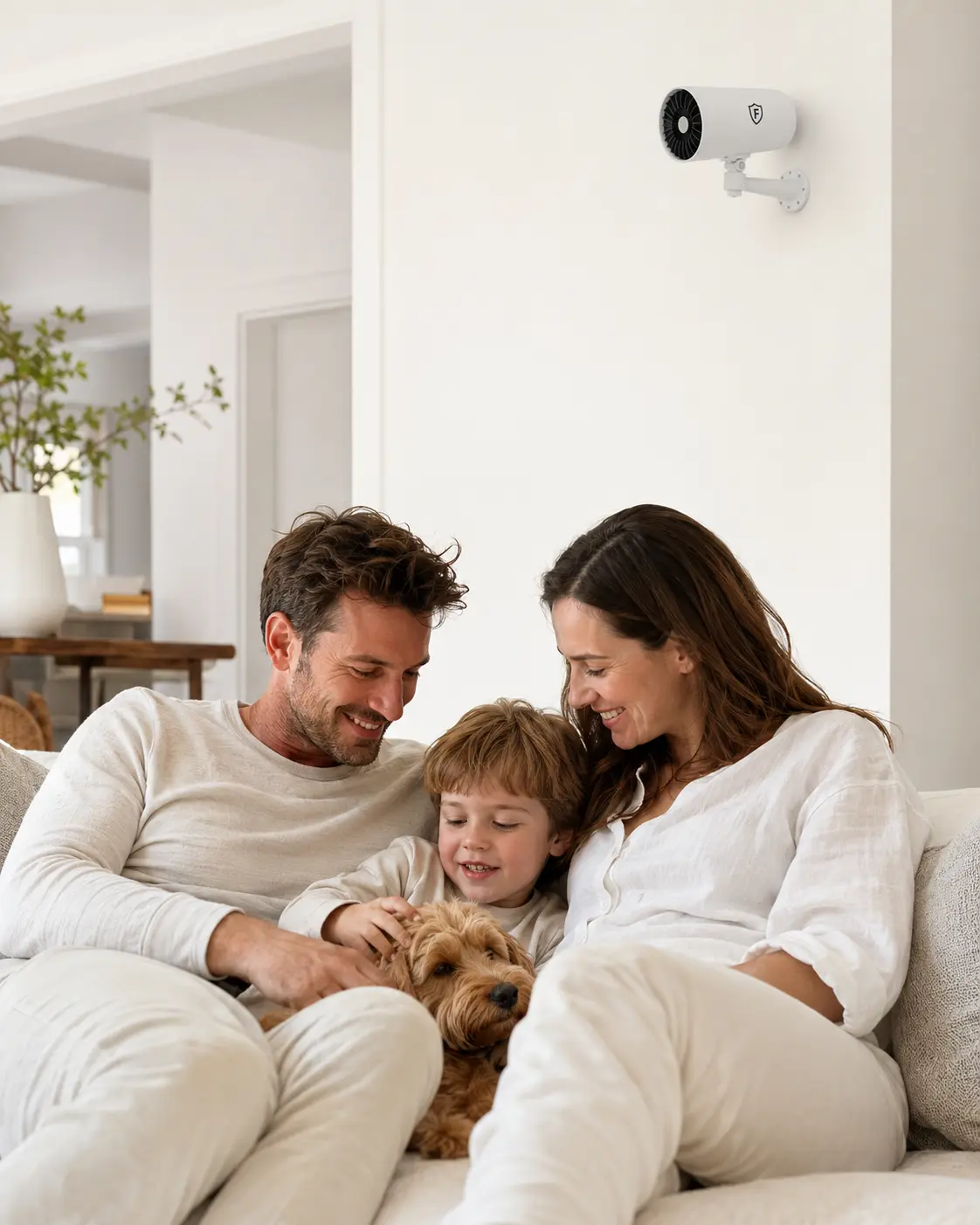
Home security has quietly turned into a subscription business. Cameras that charge monthly to store your own footage, alarms that charge monthly to call you, apps that charge monthly to unlock features. Yet the uncomfortable truth remains: on the night someone actually forces your back door, most of that stack will watch it happen.
This guide is about what actually protects a home, in the order that matters, and how to build real protection without a monitoring contract.
Start with how burglars choose houses
Burglars are opportunists. They prefer homes that look unoccupied, entrances that are not overlooked, and quick ways in and out. Lighting, visible cameras, and signs of activity all lower your odds of being picked. We cover this in depth in what burglars look for, but the short version is: make your home a slower, riskier, more uncertain target than the next one.
The honest limits of alarms and cameras
An alarm is a loudspeaker. It creates pressure and sometimes shortens a burglary, but it does not physically prevent anyone from walking to your bedroom drawer. A camera is a witness. It may help afterwards, and it may deter the cautious, but a hood and a fast exit defeat it in practice.
Neither device changes what happens inside the house during the break-in. That gap between detection and response is where almost all the loss happens, and closing that gap is what the response layer is for.
The response layer: stopping the break-in itself
A security fog system is one of the very few measures a homeowner can install that acts during the burglary. The moment your alarm or sensor triggers, the protected room fills with dense, harmless fog. An intruder who cannot see the room cannot search it. In practice, they leave.
The fog is food-grade, safe for family and pets, and leaves no residue on your furniture or electronics. It clears by itself. What it protects is not just your things but the feeling that your home is not a place someone can simply walk through.
A sensible home setup, without subscriptions
Good locks on every entrance. Motion lighting where it is dark. A basic local alarm or sensors on the doors that matter. And one fog unit covering the space where a burglar would go first, usually the living room or master bedroom. The Fogaway X1 was designed for exactly this: a one-time purchase, no monitoring fees, self-installed in minutes, triggered by sensor, panic button, remote or app, with coverage up to 60 square metres.
If you are comparing approaches, our breakdown of self-install versus professionally installed security goes through the real costs and trade-offs.