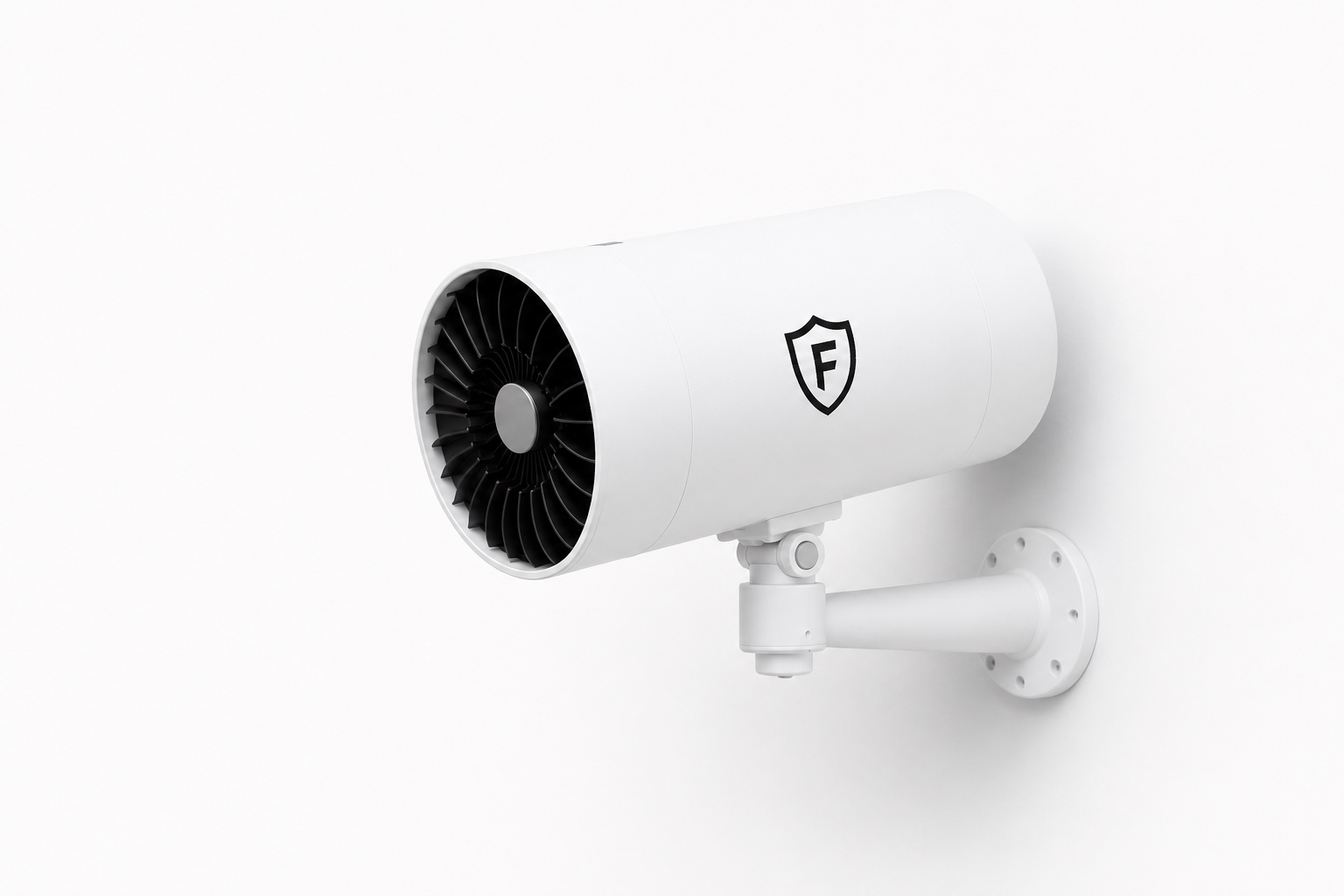
Most security devices do one of two things. They tell you a break-in is happening, or they record it for later. A security fog system does something different: it physically stops the burglary while it is still in progress, by removing the one thing every intruder depends on. Sight.
The idea is simple to say and hard to argue with. A burglar cannot steal what they cannot see. Within seconds of activation, a fog security device fills the protected room with a dense, white, harmless fog that reduces visibility to almost nothing. The intruder is standing in the room with your valuables, and the room has effectively disappeared.
How the technology works
A security fog device holds a cartridge of food-grade fog fluid, similar in principle to the glycol fluids used in stage and event fog machines, but engineered for much faster and denser output. The unit keeps an internal heating element ready. When the system is triggered, by an alarm signal, a panic button, a remote, or an app command, the fluid is flash-vaporised and expelled as a thick fog that expands to fill the space in seconds.
The fog is dry, leaves no residue on furniture or electronics when the system is properly installed and maintained, and clears on its own after the event. What it does in the meantime is the whole point: it turns a five-minute burglary into an impossible one.
Why visibility is the weak point of every burglary
Break-ins are fast. An intruder wants to be in and out before anyone responds, which means every second they spend searching, grabbing and navigating matters to them. Alarms create pressure but do not physically slow anyone down, and cameras only matter after the fact, if the footage identifies anyone at all.
Fog attacks the burglary itself. In near-zero visibility an intruder cannot find the till, the display case, the jewellery drawer or the way to the back room. Most simply turn around and leave the way they came in, with nothing.
Where fog systems are used
You may also hear these devices called fog cannons, fogging systems or SmokeCloak, the brand name that became shorthand for the whole category.
Security fog started in high-risk commercial spaces such as jewellers, phone shops, pharmacies and cash-handling rooms, where the stock is compact, valuable and easy to carry. As devices became smaller and self-installation became realistic, homes joined the list. A living room, a home office with expensive equipment, or a safe room are all natural fits.
The Fogaway X1 is built exactly for this: a compact wall-mounted unit that covers up to 60 square metres, fires in under a second, and installs without a technician. You can read how it compares to a traditional alarm in our guide to security fog versus burglar alarms.
What a fog system does not replace
Fog is a response layer, not a detection layer. It works best alongside something that notices the break-in: door and window sensors, a motion detector, an existing alarm, or simply a person pressing a panic button. Many owners keep their current alarm exactly as it is and add fog as the part that actually stops the intruder rather than just announcing them.
It also does not replace sensible basics. Good locks, lighting and locked display cases still matter. Fog is what takes over in the minutes where every other measure has already been beaten.