For decades the choice was simple because there was no choice: real security meant a van outside your house, a technician drilling walls, a control panel you never fully understood, and a monthly invoice forever. Self-installation used to mean settling for less. That is no longer true, and it is worth being precise about what changed and what did not.
What professional installation still does best
Complex, multi-zone estates: a warehouse with a dozen zones, integrated access control, certified monitored response with guard dispatch. If your requirements read like a specification document, professional design and installation earn their cost. The same goes for sites where insurance mandates certificated installation.
What changed for everyone else
For a home or a single shop floor, the hard parts of security have been engineered into the products themselves. Wireless sensors replaced cabling. Apps replaced control panels. Guided placement replaced the surveyor. A modern self-install device goes on the wall in minutes, and the money that used to buy drilling now buys the hardware itself.
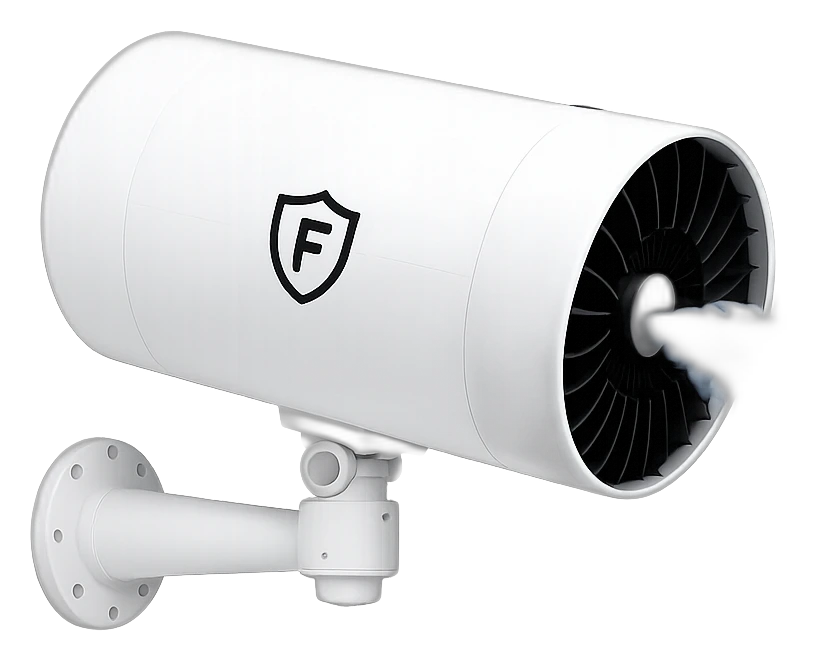
The economics matter over time. Monitoring contracts cost every month whether anything happens or not. A one-time device with no subscription, like the Fogaway X1, is bought once and simply exists on your wall, armed.
The real question: what happens during a break-in?
Strip away the installation debate and ask what each setup does in the critical minutes. A professionally monitored alarm detects and calls for a response that is minutes away. A self-installed fog system detects, or is triggered, and responds in the same second, filling the room with dense fog that ends the search on the spot. Installation method turns out to be the least important part of the comparison; the response layer is the important part, and it is available without a technician.
Making the choice
If you run a complex multi-zone site with mandated certification, go professional and add fog as the response layer within it. If you are protecting a home or a shop floor, a self-install stack of decent locks, a basic alarm and a fog unit covers the realistic threat, with no contract and no waiting for an engineer. Our guides to home security and business security lay out both versions step by step.